
Late June, a group of major BC developers — including Amacon, Beedie, Bonnis Properties, Cressey Development Group, Intracorp, Mosaic Homes, Polygon, Strand Development, Wesbild, and Westbank — signed an open letter to Prime Minister Mark Carney, federal Minister of Housing Gregor Robertson, BC Premier David Eby, BC Minister of Housing Christine Boyle, and former Housing Minister Ravi Kahlon (now Minister of Jobs and Economic Growth).
The gist of their letter: the construction business is struggling, and bringing foreign investors back into the market would help deliver more housing supply two to three years from now.
“In the absence of foreign investors, fewer projects will meet presale financing thresholds, suppressing supply delivery, which serves no one in a housing crisis as projects will not start.”
“While we understand that the ban was implemented to protect housing supply for Canadians, it has unfortunately impacted the construction industry.”
In short, their argument is this: without foreign buyers, current projects won’t get off the ground, leading to job losses now and a housing shortage later.
While I can sympathize with any business wanting to protect its bottom line, but this doesn’t make sense. We’ve already established that foreign buyers are a major reason housing prices became so unaffordable for ordinary Canadians in the first place. Asking the government to reopen the market to foreign investors means letting them bid up prices again — so developers can continue to make money? What’s the point of adding more units in two to three years if hardly anyone here can afford to buy them?
Thankfully, the Premier and Housing Minister weren’t persuaded.
“We don’t want to go back to the days when foreign investors were buying up empty condos and leaving neighbourhoods empty and pushing up the prices for people and families.”
The government seems to recognize that we went down the wrong path. For too long, BC’s economy was addicted to foreign real estate investment as a source of growth, building an entire market around it. Now that we’re trying to take a different path, there will be adjustment pains. Withdrawal from any addiction is uncomfortable — but in the long run, it’s the right move.
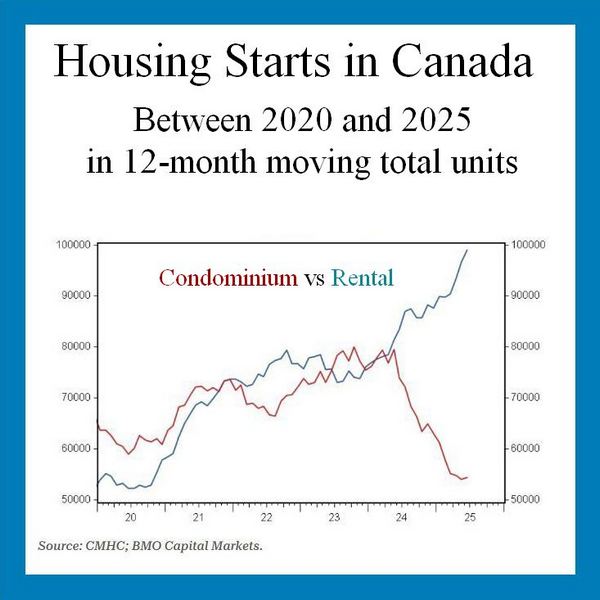
And honestly, the situation may not be as dire as developers suggest. While presales for condos might be slowing, purpose-built rental construction is on the rise, which means construction workers will still have plenty of work. Two or three years from now, there may be fewer units for sale — but there will be more to rent. Given current prices, that’s not a bad thing. A large increase in rental supply could push rents down, which in turn might cool investor demand and eventually bring home prices down.
Another encouraging trend: about a third of all land purchases by dollar value are now for multiplex developments. Vancouver’s new zoning rules — allowing up to six units on a single residential lot — are finally catching on. Homeowners are converting single-family houses into multiplexes. For some, this means creating homes for their children; for others, it means selling off units for profit. This shift encourages more smaller-scale construction projects and potentially spreads economic benefits more evenly. Instead of profits being concentrated among a handful of big developers, more small builders can share in the gains. Housing will remain a key part of BC’s GDP, but the shape of the market is shifting — and that’s a good thing.